
The Essential Trio: How Solar Panels, Batteries & EV Chargers in Scotland & The Scottish Borders - Maximize Energy Efficiency. The Home Energy System.
Most people who come to KDC Electrical Contractors Ltd, thinking about solar are not thinking about a system. They are thinking about a product, i.e. panels on the roof to cut the electricity bill. That is a reasonable starting point, but it misses what is now possible, and what makes the real financial difference.
In 2026, solar panels, battery EV charger in Scotland are not three separate purchases, they are a Scottish Borders home energy system.
For homes with an electric vehicle, or those planning to get one, they are a single integrated energy system and when designed that way from the outset, they work considerably harder for you than any of the three would alone.
The problem with solar on its own
A solar system without battery storage generates electricity during the day, when the sun is out. But most households use the majority of their electricity in the morning and evening — the very times when solar output is lowest or zero.

Without storage, roughly 65% of what a typical system generates is exported back to the grid, earning you somewhere between 4p and 15p per unit depending on your export tariff.
That is significantly less than the 24–25p per unit you would have saved by using it yourself.
In short, you are selling low and buying high.
Battery storage increases self-consumption from around 35% to 70% or more — doubling the value of every unit your panels produce. |
What a battery changes
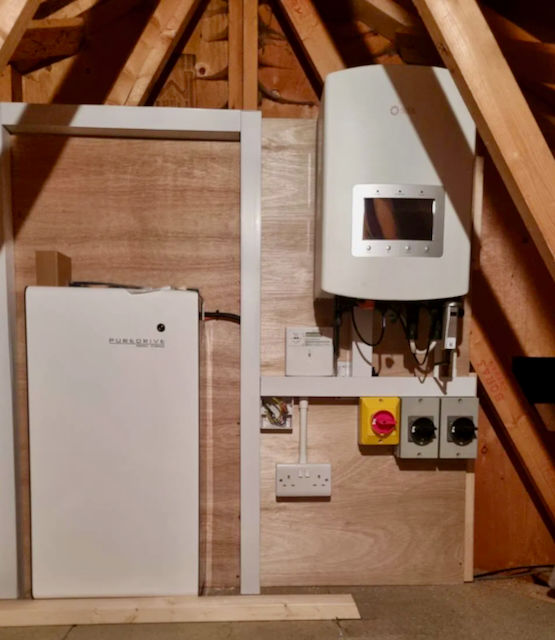
A home battery stores the surplus your panels generate during the day and releases it when you need it, in the evenings, overcast days, winter mornings. Instead of exporting cheap and importing expensive, you are using your own power throughout the day.
For a typical 4kW solar system in the Scottish Borders, adding battery storage can increase annual savings from around £430 to well over £800, without generating a single additional unit of electricity. The panels produce the same; you simply use far more of what they make.
Modern batteries are also smart. Systems in 2026 factor in weather forecasts, energy tariff schedules and household usage patterns to decide when to charge, when to store and when to export.
Some will automatically hold back charge if a cheap overnight tariff is available, maximising the economic benefit at every point in the day.
Where the EV charger transforms the whole equation
An electric vehicle is, in energy terms, a large battery on wheels. The average UK EV has a usable battery capacity of 50–80 kWh. Your home battery might hold 5–15 kWh. The implication is significant: your car can absorb an enormous amount of surplus solar energy that would otherwise be exported.
With a solar-aware EV charger, such as the myenergi Zappi, which KDC Electrical Contractors install and which is specifically designed for solar integration. Your charger monitors how much surplus your panels are generating in real time and adjusts the charging rate accordingly.
When the sun is producing more than your home needs, the excess flows directly into your car rather than back to the grid.
The result, on a reasonable summer day, is a car that effectively charges for free.
~8,000 miles/year driven free from a 4kW solar system | £1,400 annual saving vs petrol (typical driver) | 5–7 yrs combined payback period, solar + battery + EV |
Why do all three together, and why now?
There are three strong reasons to install solar, battery and EV charging as an integrated system rather than piecemeal.
1. System design works better from the start
When a single installer designs the whole system, the solar array is sized correctly for the battery, the battery is sized correctly for the household load and the EV, and the EV charger is specified to work intelligently with the generation. Bolt-on additions often result in compatibility issues, sub-optimal sizing and missed savings.
2. The electrical work is done once
Installing all three in one visit means the consumer unit upgrade, cable runs and DNO notification happen as a single piece of work. Adding an EV charger to an existing solar installation typically requires revisiting the electrical infrastructure — at additional cost and disruption.
3. The grant and VAT picture currently favours action
Right now, there’s a window of opportunity.
Solar panels and battery systems are currently available with 0% VAT across the UK, saving many homeowners up to £2,000. This incentive is only guaranteed until March 2027 and may not be extended.
In Scotland, you can also spread the cost with interest-free funding through the Home Energy Scotland, alongside potential EV charger grants via the Energy Saving Trust for eligible households.
What a typical system looks like - Solar panels battery EV charger | Scottish Borders
A KDC whole-home setup in the Scottish Borders could include:
4–5kW of solar panels
A 10kWh battery
A smart EV charger
Typical cost: £12,000–£16,000 (before incentives)
What you get in return
£1,000–£2,500 annual savings on energy and fuel
6–10 year payback (often faster with higher usage)
25-year panel performance warranties
Protection from rising energy prices
(Figures are indicative and depend on your home and usage.)
Once installed, everything runs automatically—your system decides when to store energy, when to use it, and when to sell it back to the grid.
You don’t have to think about it.
You just benefit from it.
Solar Panels | Battery | EV charger | Scottish Borders
Talk to Kevin Campbell at KDC Electrical Contractors Ltd about designing a whole-home energy system. Free consultations across the Scottish Borders, Lothians and Northumberland. Call 07855 942203 or visit kdc-electrical.co.uk. |


Comments